
Categories
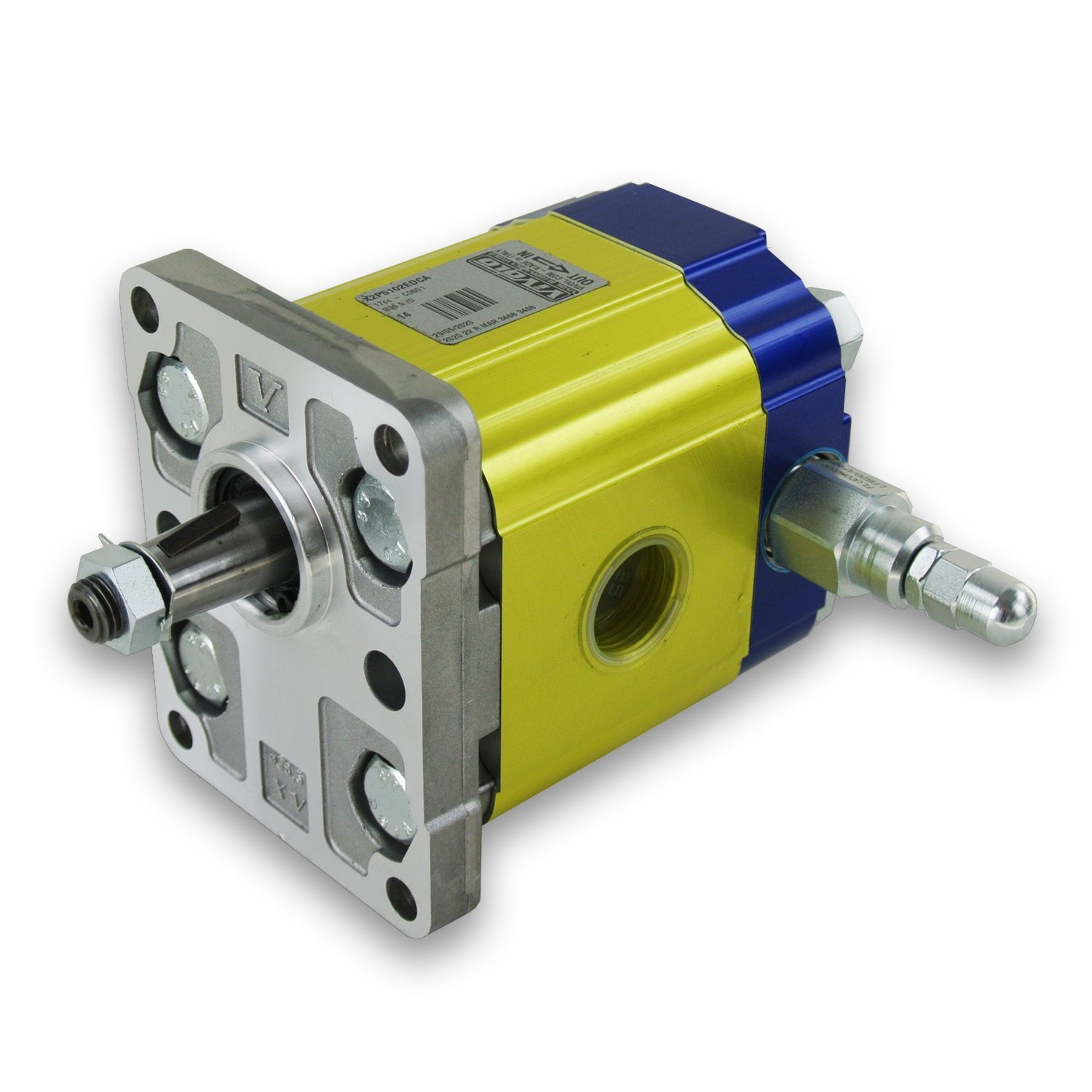
Gear Pump Rear Cover with Integrated Relief Valve - Group 1 and Group 2 - 10 to 350 bar
Store/Pumps, Gear, Piston, Vane, PTO Units and Gear Flow Dividers/Gear Pumps - Group 0 to Group 3/Group 1 Gear Pumps 6 to 40 Lt/min Power to 15 kW
SKU N-11
AU$309.70
On Sale
was AU$391.00 Save 21%
Pump Frame and Pressure Range
Please choose
Integrated Relief Valve Rear Cover - Protects the Circuit Without a Separate Relief Valve - 6 Options, Group 1 and Group 2 Frames, 10 to 350 bar Adjustable, 12-Month Warranty
In stock
1
Save this product for later
Customer reviews
Reviews only from verified customers
No reviews yet. You can buy this product and be the first to leave a review.
Gear Pump Rear Cover with Integrated Relief Valve - Group 1 and Group 2 - 10 to 350 bar
Store/Pumps, Gear, Piston, Vane, PTO Units and Gear Flow Dividers/Gear Pumps - Group 0 to Group 3/Group 1 Gear Pumps 6 to 40 Lt/min Power to 15 kW
Product Details
Brand: Vivoil
Weight: 0.80 kg
Gear Pump Rear Cover with Integrated Relief Valve - Group 1 and Group 2
This is the rear cover off a Group 1 or Group 2 gear pump with a relief valve built into it. It replaces the plain cover on the back of the pump, so the pump protects its own circuit. No separate relief valve, no extra manifold, no extra plumbing - the pressure setting lives in the pump itself.
Fitters use these when there is nowhere sensible to mount an inline relief, on tight tipper and tail-lift installations, on 12 and 24 volt power packs, and on any circuit where a customer might dead-head the pump against a closed valve. Pick your frame and pressure band below.
Ways to buy this cover
- Off the shelf: six covers - Group 1 and Group 2, in three pressure bands each. Pick from the dropdown.
- Already own the pump? This cover bolts onto an existing pump of the same frame. You do not need a new pump.
- Buying pump and cover together? Order the pump from the Group 1 or Group 2 listing and add the cover here - we will assemble and pressure-set it before it ships if you tell us the setting you want.
- Group 3 pumps: the factory does not build an integrated relief cover for the Group 3 frame. Use an inline or cartridge relief valve instead, or send us the circuit and we will size one.
Pick your cover
| Part Number | Pump Frame | Adjustment Range | Weight |
|---|---|---|---|
| N-11 | Group 1 | 10 to 105 bar | 0.8 kg (estimate) |
| N-12 | Group 1 | 70 to 210 bar | 0.8 kg (estimate) |
| N-13 | Group 1 | 140 to 350 bar | 0.8 kg (estimate) |
| N-21 | Group 2 | 10 to 105 bar | 1.2 kg (estimate) |
| N-22 | Group 2 | 70 to 210 bar | 1.2 kg (estimate) |
| N-23 | Group 2 | 140 to 350 bar | 1.2 kg (estimate) |
What is in the box
- One rear cover with the relief cartridge fitted and the adjusting screw locked
- Cover O-ring and body seal
- Mounting screws to suit the frame
The pump body seal set is NOT included - if the pump has been in service, fit a fresh seal kit at the same time. There is a link below.
Specifications
| Brand and origin | Vivoil / Caproni compatible, European made |
| Frames covered | Group 1 (32mm flange) and Group 2 (36mm flange) |
| Pressure bands | 10-105 bar, 70-210 bar, 140-350 bar |
| Adjustment | Screw adjustable within the band, locknut fitted |
| Relief type | Direct acting poppet, internal return to inlet |
| Seals | Nitrile (NBR) standard |
| Body | Aluminium, matched to the pump frame |
| Warranty | 12 months |
How to choose
- Frame first. Measure the pump mounting flange - 32mm across the register is Group 1, 36mm is Group 2. Getting this wrong means the cover will not bolt on.
- Then the band, not the number. Pick the band your working pressure sits in the MIDDLE of, not at the top. A relief set at the very top of its range chatters and runs hot.
- Typical settings: tail lifts and tarps 120-160 bar, tipper hoists 180-210 bar, log splitters 200-250 bar, presses 250-320 bar.
- Not sure what the circuit needs? Call us with the ram bore, the load and the pump displacement and we will work the setting out with you.
Technicians Advice
The mistake we see most often with these covers is people setting the relief with no load in the circuit. You cannot - the valve never lifts, so the gauge only shows line loss and you end up screwing the adjuster all the way in. Set it against a real load: extend the ram to the end of its stroke, hold the lever over so the pump is deadheading through the relief, and read the gauge THEN. That is the only reading that means anything.
Second thing: this cover returns relief flow internally, back to the pump inlet, not to tank. That is what makes it neat, and it is also its limit. Oil that keeps cycling through the pump instead of going back to a tank picks up heat fast. If your operator sits on the lever with the ram bottomed out for a minute at a time, every minute, you will cook the pump - and the shaft seal goes first. On duty cycles like that, use a proper external relief plumbed to tank and leave the pump cover plain.
Third: torque the cover screws evenly and in a cross pattern, and do not exceed the pump maker figure. These are aluminium bodies. Over-torque one corner and you distort the gear housing, which puts a wear step in the gear faces and kills the pump inside a hundred hours. If you have the pump apart anyway, replace the shaft seal - it costs almost nothing next to the labour of dropping the pump twice.
Complete your setup
Vivoil Group 1 Gear PumpCaproni Group 1 Gear PumpVivoil Group 2 Gear PumpCaproni Group 2 Gear PumpVivoil Pump Seal KitsCaproni Pump Seal KitsFitting out a fleet or buying several? Call us and we will work out freight and lead time on the whole lot.
Shipping and Freight Information
We ship Australia-wide. Orders are dispatched from our supply network in Melbourne, Brisbane and Perth, so your parts leave from the warehouse closest to you on express freight.
Out of Stock Policy
It is our intention to hold stock on every listed item. If a size is temporarily unavailable you will be told straight away and offered a full refund or a short wait for incoming stock.
Need help choosing? Call 1300 146 737 or email sales@mhfgc.com.au - real technicians, real answers.
You May Also Like
On Sale
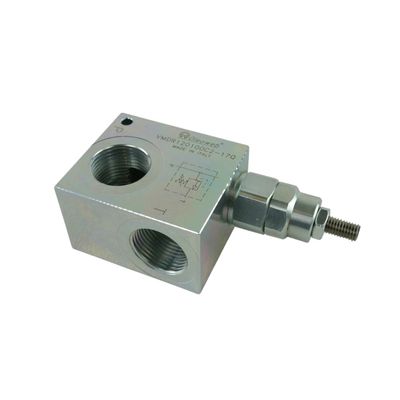
Oleoweb VMDR Inline Pressure Relief Valve - 120 L/min - 3/4 and 1 inch BSPP
Oleoweb VMDR Inline Pressure Relief Valve - 120 L/min - 3/4 and 1 inch BSPP
Big-flow protection for group 3 pumps and orbital motor circuits - two port sizes, springs from 10 to 350 bar
was AU$264.00
Save 21%
AU$209.10
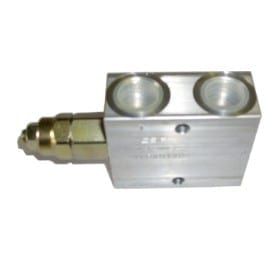
VLP Inline Relief Valve - Aluminium Body - 1/4 to 1 inch BSPP
VLP Inline Relief Valve - Aluminium Body - 1/4 to 1 inch BSPP
Italian-made CBF inline reliefs - every port size from 1/4 to 1 inch, springs to 350 bar
AU$146.80
On Sale
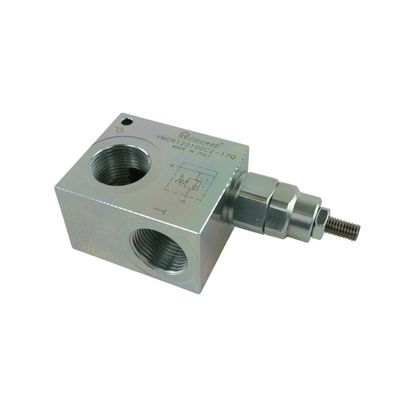
Oleoweb VMDR Inline Pressure Relief Valve - 90 L/min - 1/2 inch BSPP
Oleoweb VMDR Inline Pressure Relief Valve - 90 L/min - 1/2 inch BSPP
Mid-flow protection in a compact 1/2 inch body - springs from 10 to 350 bar, Italian made
was AU$182.00
Save 21%
AU$144.10
On Sale
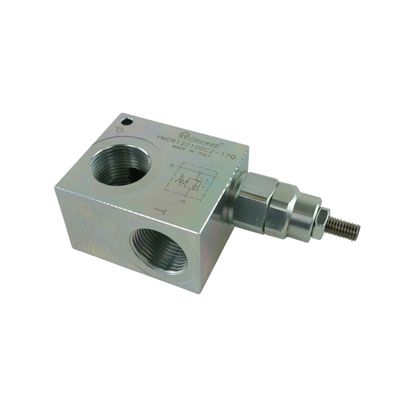
Oleoweb VMDR Inline Pressure Relief Valve - 20 L/min - 1/4 inch BSPP
Oleoweb VMDR Inline Pressure Relief Valve - 20 L/min - 1/4 inch BSPP
The small-circuit protector - power packs, mini pumps and pilot lines, springs from 10 to 350 bar
was AU$138.00
Save 21%
AU$109.30
Display prices in:AUD