
Categories
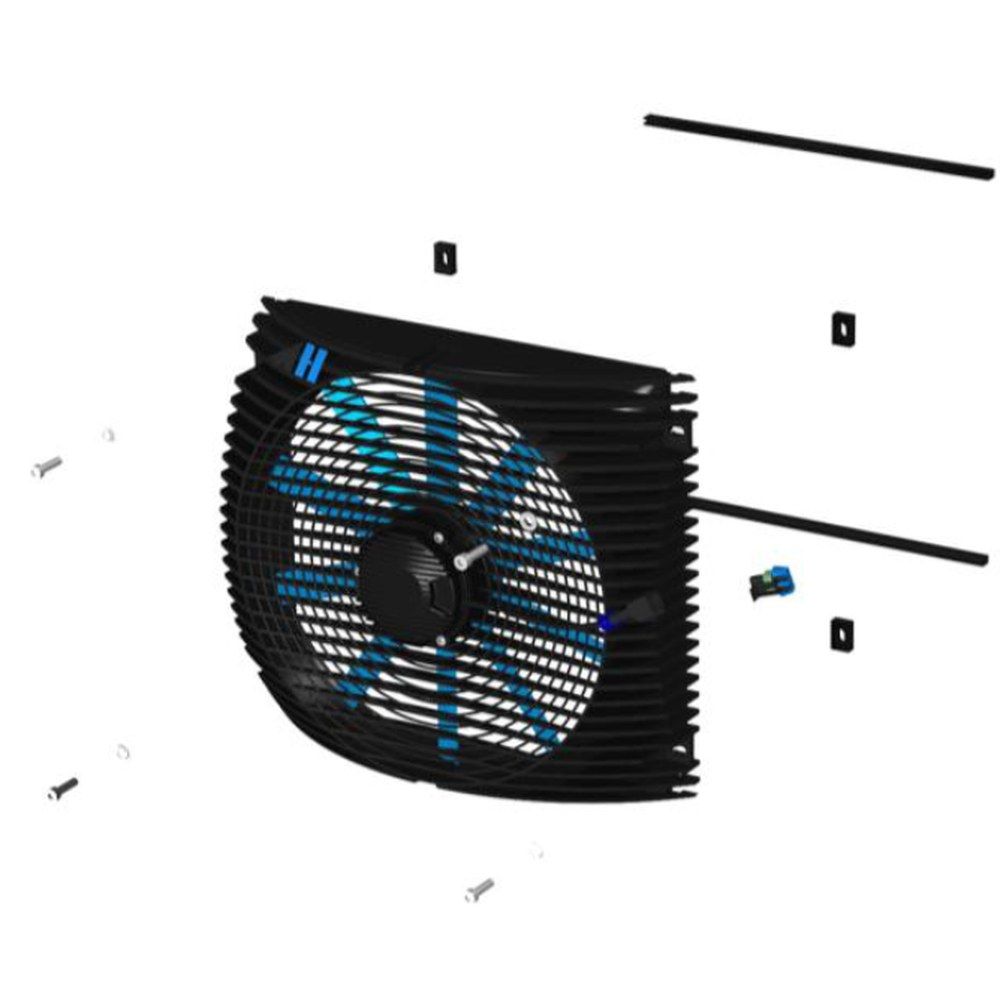
ASA Hydraulik Replacement Cooler Fan Kit - 12V or 24V DC, Pull or Push Airflow
SKU ILLELE1434A1
AU$389.00
On Sale
was AU$486.20 Save 20%
Voltage, Airflow and Cooler Fitment
Please choose
In stock
1
Save this product for later
Customer reviews
Reviews only from verified customers
No reviews yet. You can buy this product and be the first to leave a review.
ASA Hydraulik Replacement Cooler Fan Kit - 12V or 24V DC, Pull or Push Airflow
Product Details
Brand: ASA Hydraulik
Weight: 0.94 kg
ASA Hydraulik Replacement Cooler Fan Kit - 12V or 24V DC, Pull or Push Airflow
When a cooler fan dies the core is usually fine, and this is the factory replacement assembly that puts it back into service. Each kit is built for a specific cooler and a specific voltage, and it is either a Pull fan or a Push fan, so the fitment column in the table below is the column that matters. Match the kit to the cooler you have and to the airflow direction it was built with. Pick your model below and it is on its way.
Ways to buy:
- Off the shelf - twenty kits in the picker below, covering Low Line, TT Rail and ASA Series coolers in 12V and 24V DC, in Pull and in Push where the factory makes both.
- Find your cooler in the Fits column first, then take the row that matches your machine voltage and the airflow direction the cooler already has.
- Not an ASA cooler, or building your own pack? The generic MBD axial fans are the better answer for radiators, oil coolers, condensers and custom builds. They are a fan, not a cooler-specific kit.
- Add the control - a temperature switch or a fan controller runs the fan on oil temperature instead of all day, which is the single easiest way to make the next fan last longer.
- Not listed? Call us and we will factory-code it. If your cooler is not in the Fits column, call with the cooler part number off the plate and we will look up the correct fan for it.
Pick your model
| SKU | Voltage | Current draw | Airflow | Fits |
|---|---|---|---|---|
| ILLELE1434A1 | 12V DC | 5.4A | Pull | Low Line 0043G, 0053G |
| ILLELE1434A2 | 24V DC | 2.7A | Pull | Low Line 0043G, 0053G |
| ILLELE2250A1 | 12V DC | 5.4A | Pull | Low Line 0023G |
| ILLELE2250A2 | 24V DC | 2.7A | Pull | Low Line 0023G |
| ILLELE0240A1 | 12V DC | 7.4A | Pull | Low Line 06G |
| ILLELE0240A2 | 24V DC | 3.7A | Pull | Low Line 06G |
| ILLELE0240A3 | 12V DC | 10.4A | Pull | TT Rail 07RD01 |
| ILLELE0240A4 | 24V DC | 5.2A | Pull | TT Rail 07RD02 |
| ILLELE0240O5 | 12V DC | 16.2A | Pull | TT Rail 07RD03 |
| ILLELE0240O6 | 24V DC | 8.1A | Pull | TT Rail 07RD04 |
| ILLELE0295A1 | 12V DC | 15.4A | Pull | Low Line 0084GD01 |
| ILLELE0295A2 | 24V DC | 7.7A | Pull | Low Line 0084GD02 |
| ILLELE0295A5 | 12V DC | 20.8A | Pull | ASA 0115, 257AD03 and 0367, TT Rail 11 and 13, Low Line 0084GD03 |
| ILLELE0295A6 | 24V DC | 10.4A | Pull | ASA 0115, 257AD04 and 0367, TT Rail 11 and 13, Low Line 0084GD04 |
| ILLELE0295S5 | 12V DC | 20.8A | Push | ASA 0115, 257AD03 and 0367, TT Rail 11 and 13, Low Line 0084GD03 |
| ILLELE0295S6 | 24V DC | 10.4A | Push | ASA 0115, 257AD04 and 0367, TT Rail 11 and 13, Low Line 0084GD04 |
| ILLELE0385A1 | 12V DC | 18.6A | Pull | ASA 0176 - 0257AD01, TT Rail 16 - 25 |
| ILLELE0385A2 | 24V DC | 9.3A | Pull | ASA 0176 - 0257AD02, TT Rail 16 - 25 |
| ILLELE0385S1 | 12V DC | 18.6A | Push | ASA 0176 - 0257AD01, TT Rail 16 - 25 |
| ILLELE0385S2 | 24V DC | 9.3A | Push | ASA 0176 - 0257AD02, TT Rail 16 - 25 |
Pull draws air through the core. Push blows air through it. Current draw is the running figure, not the inrush on start.
What is in the box
- The replacement fan and its motor as an assembly, in the voltage and airflow direction shown in your row, to suit the cooler listed in the Fits column.
- NOT included - the cooler, the core, or the shroud or housing. This is the fan assembly only.
- NOT included: wiring, plugs, fuses, relays, or a temperature switch or fan controller.
- NOT included: hoses, fittings, connector kits or mounting feet.
- Airflow direction is not switchable. A Pull kit is a Pull kit. You cannot turn one into a Push by reversing the wires, because the blade profile is handed.
Specifications
| Parameter | Value |
|---|---|
| Brand | ASA Hydraulik, made in Austria |
| Product | Replacement fan assembly for ASA air blast oil coolers |
| Voltages | 12V DC and 24V DC |
| Airflow directions | Pull (draws air through the core) and Push (blows air through it) |
| Current draw range, 12V DC | 5.4A to 20.8A depending on the kit |
| Current draw range, 24V DC | 2.7A to 10.4A depending on the kit |
| Cooler families covered | Low Line, TT Rail and ASA Series, as listed per SKU in the picker table |
| Fitment | Kit specific. Match the kit to the cooler in the Fits column. |
| Quantity required | One kit per fan. A twin fan cooler has two fans. |
How to choose
- Start in the Fits column, not the price. These are cooler specific assemblies. Read the cooler part number off the plate on your unit and find it in the table.
- Match the machine voltage. A 12V and a 24V kit are the same fan doing the same work, the 24V one just does it on about half the current. Take whatever the machine already is.
- Match Pull or Push to what the cooler was built with. The shroud, the mounting and the blade handing all assume one direction. Fit the wrong one and you are fighting the airflow through the core instead of helping it.
- Check the current draw against the existing circuit. If you are stepping up to a high power kit, for example from 10.4A to 20.8A on 12V, the old fuse, relay and cable will not do. Size all three for the new fan.
- Twin fan cooler? Order two kits. And if one has failed, look hard at the second one, because it has done the same hours in the same air.
Technicians Advice
The number that catches people out on a DC cooler fan is not the one on the label. The running current is what the table shows, but a fan motor starting from stopped is close to a short circuit for the first moment: inrush is commonly several times running current, and it lasts long enough to nuisance-blow a fuse chosen tight to the running figure.
So fuse for the inrush and the cable, not for the nameplate. As a working approach, take the running current, allow a healthy margin above it, use a slow-blow or motor-rated fuse rather than a fast one, and pick a relay whose contact rating is comfortably above the running current rather than level with it, because relay contacts are killed by making current, not by carrying it.
Watch your cable and your earth too. A 20.8A fan on 12V through undersized wire and a rusty chassis earth will run slow and hot, draw more current than it should, and cook the relay while the fan gets blamed. Wire the fan through a relay switched by a temperature switch or fan controller rather than leaving it running whenever the key is on, and you will get years instead of seasons.
On direction, do not try to be clever. Pull and Push kits have handed blades and are matched to the shroud that came on the cooler, so reversing polarity to change airflow either will not work or will move a fraction of the air with a lot of noise. Check what the cooler has and buy the same.
Last thing before you close it up: while the fan is off the cooler you have the only easy access you will get to the back of the fin block, so blow it out with low pressure air from the outlet side back towards the intake and get the years of chaff out of there. Never a pressure washer, it folds the fins flat and seals the core.
Official Datasheets
📄 Fan Kit 0240 (PDF)📄 Fan Kit 0295 (PDF)📄 Fan Kit 0385 (PDF)📄 Fan Kit 1434 (PDF)📄 Fan Kit 2250 (PDF)
Complete your setup
Put the new fan on a temperature switch or controller and it will not spend its life running for nothing.
Fan Temperature ControllersTemperature SwitchesTT Rail Connector KitsFoot Mounting Kits
Need help choosing? Call 1300 146 737 or email sales@mhfgc.com.au - real technicians, real answers.
Display prices in:AUD