
Categories
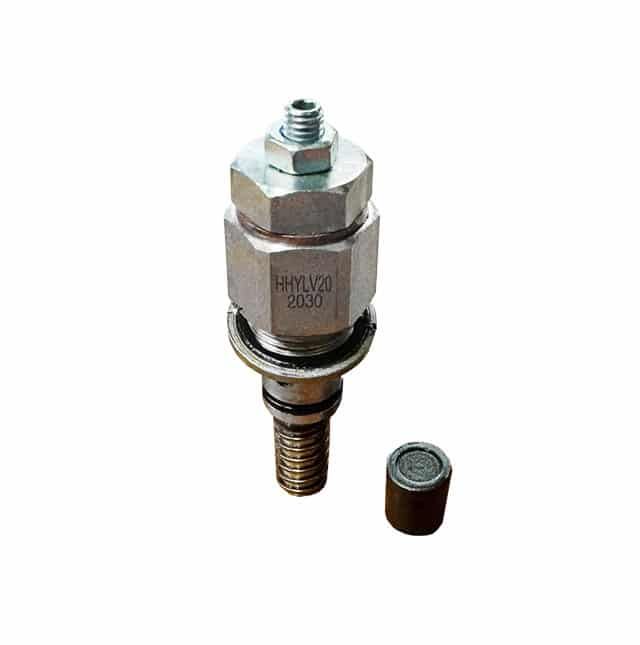
DCV Main Relief and Port Relief Cartridges - DCV20 to DCV200
SKU DCV-RELIEF
AU$73.00
Cartridge
Please choose
Set your pressures properly - main relief and per-section port relief cartridges, 30 to 350 bar
In stock
1
Save this product for later
Customer reviews
Reviews only from verified customers
No reviews yet. You can buy this product and be the first to leave a review.
DCV Main Relief and Port Relief Cartridges - DCV20 to DCV200
Product Details
Weight: 0.30 kg
Two different jobs, often confused:
Main relief sits in the inlet and caps pressure for the whole valve. Every DCV has one. Change it to re-rate the machine or because it has drifted.
Port relief sits in an individual A or B port and protects that one function at a lower pressure than the rest. This is how you stop one cylinder being over-pressured while everything else runs at full system pressure — and how you protect against shock from an external load pushing back on a closed port.
Anti-cavitation versions also let oil in. When a load with inertia is stopped suddenly, the actuator keeps moving and tries to draw a vacuum behind itself; the anti-cav valve opens and feeds it from tank instead of pulling air past the seals.
| Model | Main relief | Port relief |
| DCV20 | DCV20-RV | — |
| DCV40 | 30–180, 150–250, 180–300, 280–350 bar | — |
| DCV60 | 50–315 bar | 140 or 200 bar |
| DCV100 | 100–240 or 175–320 bar | 80–160 or 140–220 bar |
| DCV150 / DCV200 | 50–315 bar | 50–315 bar |
| DCV200 | — | 80–160 or 140–220 bar |
Set the port relief below the main relief, or it will never open and you have wasted the part.
DCV spares are model specific. A DCV40 kit will not fit a DCV60, even where the part looks identical. Check the model plate on the valve before ordering.
Technicians Advice
Match the kit to the spool code stamped on your section - spools are matched to their bore in production, so a kit fixes seals and springs, not a scored bore. Reseal on the bench, not on the machine: clean the cavity, oil every seal before assembly, and never drive a seal home dry. If a spool is scored or the bore shows wear lines, replace the section - new seals will not save it.
Fits These Valves
DCV60A - 60 L/minDCV100 - 100 L/minDCV150 - 150 L/minDCV200 - 200 L/min
Display prices in:AUD